


Gone in 60 Seconds: Preventing Car Thefts

It’s sad to say that crime is something we can all count on. And when it comes to vehicles, theft is a common issue.

The National Insurance Crime Bureau reported a peak in automobile thefts in 2023 with 1,020,729 stolen vehicles. The rates dropped to 659,880 in 2025, indicating the post-pandemic surge may be over. Unfortunately, even with lower rates there is still a vehicle stolen every 48 seconds.
We’d all like to prevent a Dude Where’s My Car situation, so let’s get rolling.
First and foremost, don’t make it easy on the criminal.
Keep Your Vehicle Safe
Park in well-lit areas near entrances or surveillance cameras. Don’t leave valuables in vehicle.
Lock your car, every time.
Make sure to remove the valet key provided with your owner’s manual and put it somewhere safe in your home. The valet key is provided by some manufactures to give limited access to folks like valets or mechanics. It can unlock the doors and start the car but can’t open the trunk or the glove box. Not all vehicles come with one, check if yours does.
Place a sticker on your rear window that hints that there is an alarm system or tracking device in place.

The next most important thing to do is know what the car thieves know.
Tactics
Relay Attack
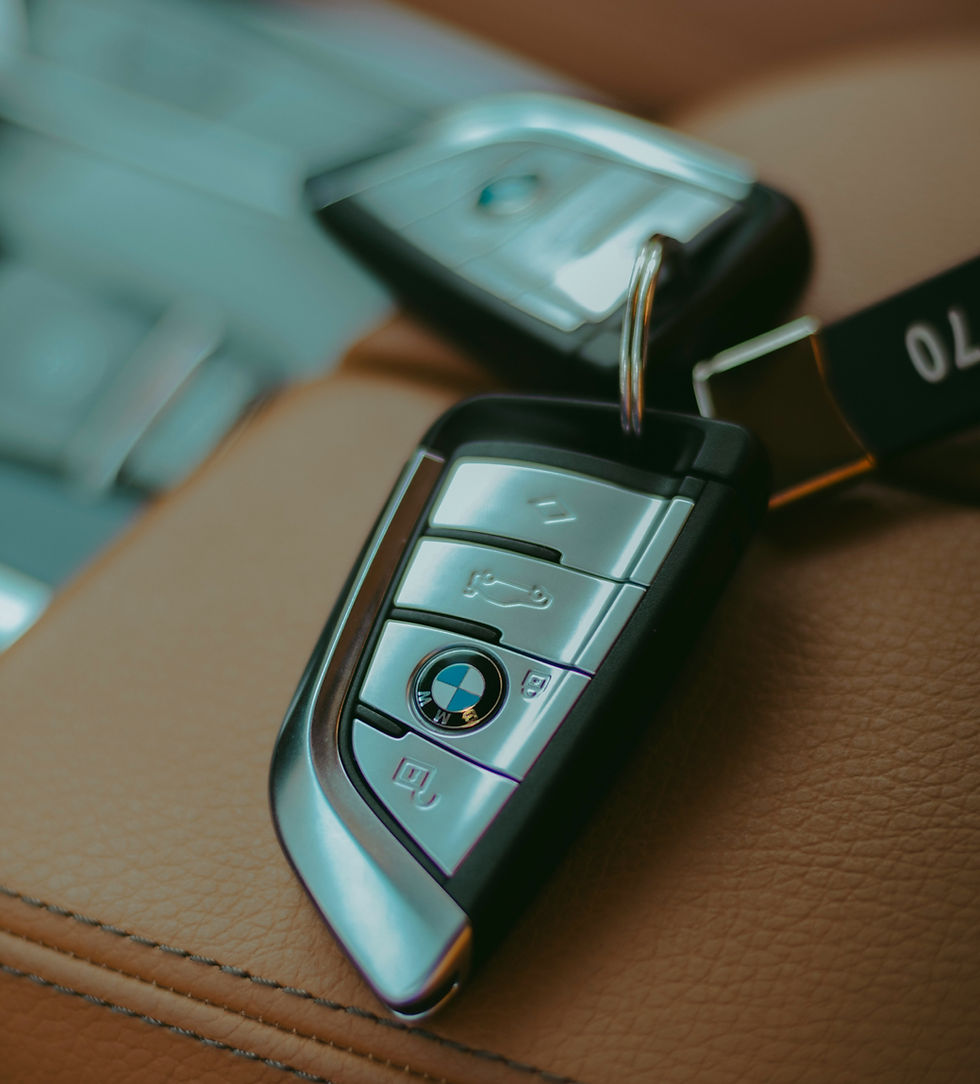
A thief hanging in the parking lot will use a transmitter to snag the signal as you lock your doors from your wireless key fob. They then basically copy and paste the signal into their device and use it to unlock your door after you leave.
Another way thieves use a relay transmitter is by standing near your home, where your keys are kept and grabbing the signal as your keys sit safely on the kitchen counter. A second person then uses another transmitter to transfer the signal to your car and off they drive as you watch your murder show without a clue.
CAN Bus Injection
Thieves take off a part of the headlight or front bumper to get to electrical wiring. They then plug a custom device into the wires and introduce operational messages into the computer, directing the vehicle to unlock doors and turn off the system that immobilizes the engine.
On-Board Diagnostics (OBD) Port Reprogramming
Once a thief is able to manually open a car door, they can use a handheld locksmith computer device in the vehicle’s universal OBD port. The software is able to rewrite the identity of the vehicle and program a dummy key fob, evading original security measures completely.
Signal Jamming
Offenders will loiter in parking lots or driveways and use radio transmitters to blast the surrounding area with interference on the same frequency as car key fobs. Once the car owner walks away and hits the “LOCK” button on their fob, the transmitters jam the command and the vehicle remains unlocked. Now the thief is free to enter the car without setting off the alarm.
AirTag/Tracker Stalking
Better organized crime rings will place a cheap tracking tag that works off of Bluetooth technology, like an Apple AirTag, inside the wheel well or under the bumper of a desirable vehicle in public parking lots or garages. Later they are able to track the vehicle’s exact location and steal it at their convenience.
Manual manipulation
Thieves can use a thin piece of metal to unlock a car door through even the slightest open window. Keep windows completely rolled up when leaving your vehicle. They won’t be able to drive off in the car, but anything inside the vehicle is fair game.

Discreet Window Breakers
Criminals can use a piece of hardened ceramic to toss at tempered side windows. Ceramic has the perfect density to shatter the glass with little sound, limiting owner’s or neighbor’s ability to detect a disturbance.
Ways to Prevent Theft
Never leave your car running while you run inside to do an errand.
When out and about: You can limit their ability to hack your key fob by wrapping your fob in aluminum foil to diminish the signal. Another option is to use an RFID-blocking bag to put your fob in to completely block the signal.
At home: Keeping your keys away from windows and doors and in an RFID box can stop these kinds of attacks in their tracks.
Turn off keyless entry in your vehicle.
Using a mechanical anti-theft device like a steering wheel lock.
Keep your vehicle’s software updated to avoid weaknesses.
After a Break-in
Assess and record the damage. Take photos and list damage on a written document. Don’t move the vehicle until you have done this. Take all photos from outside of the vehicle to avoid disrupting any evidence the police may need.
Call the police to file a report. They may or may not come on-site to file the report.
Hopefully, you didn’t leave anything in your vehicle with your personal information or credit cards. If so, cancel the credit cards as soon as possible.
Notify your bank and they can assist with replacing debit and credit cards. If information such as your name, birth date, and/or Social Security number were accessed, you are at risk for identity theft. It’s important to contact one of the top three credit bureaus—Experian, Transunion, and Equifax—to place a fraud alert.
Notify your insurance company. This is where the photos, written documentation, and police report come in handy.


Comments